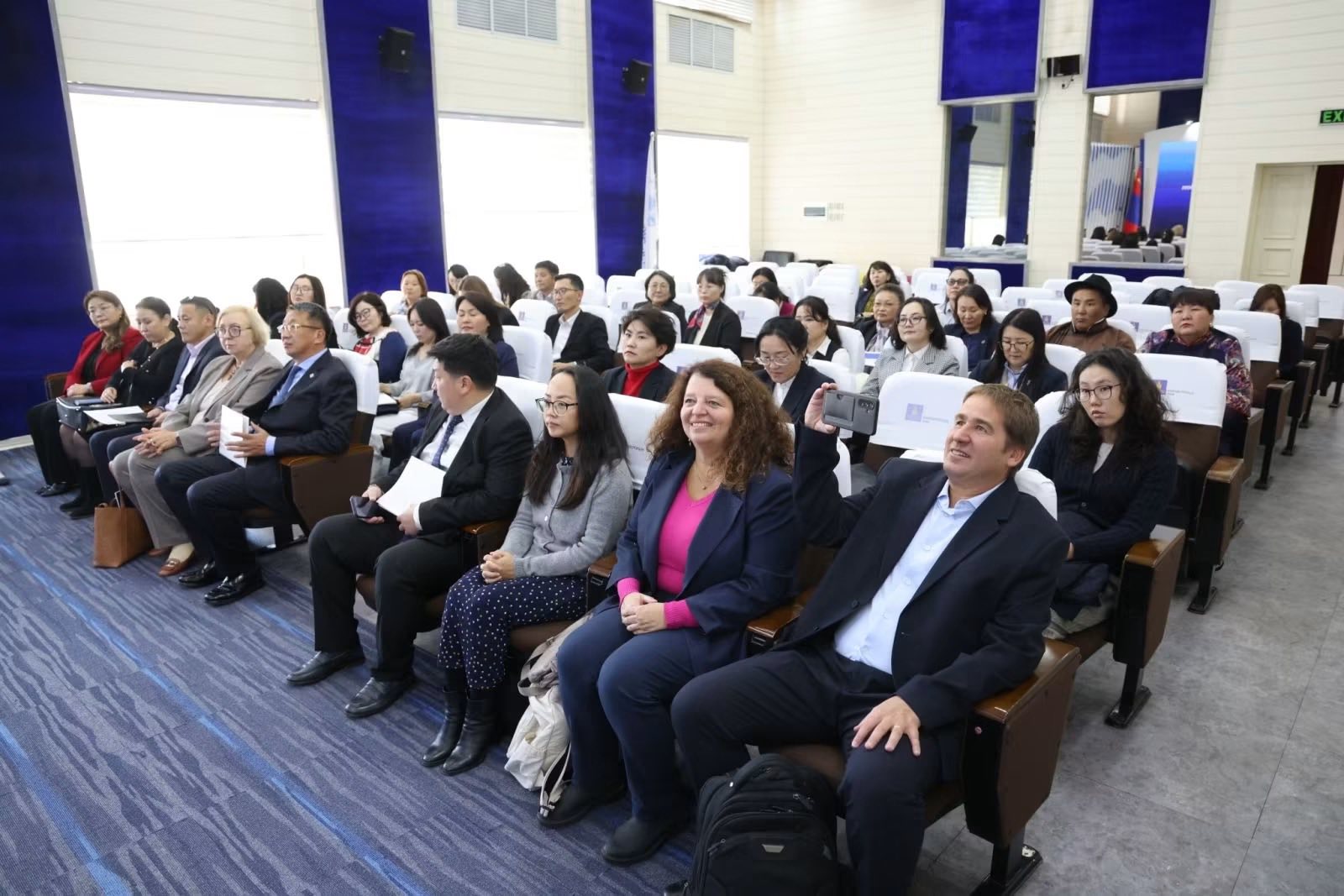
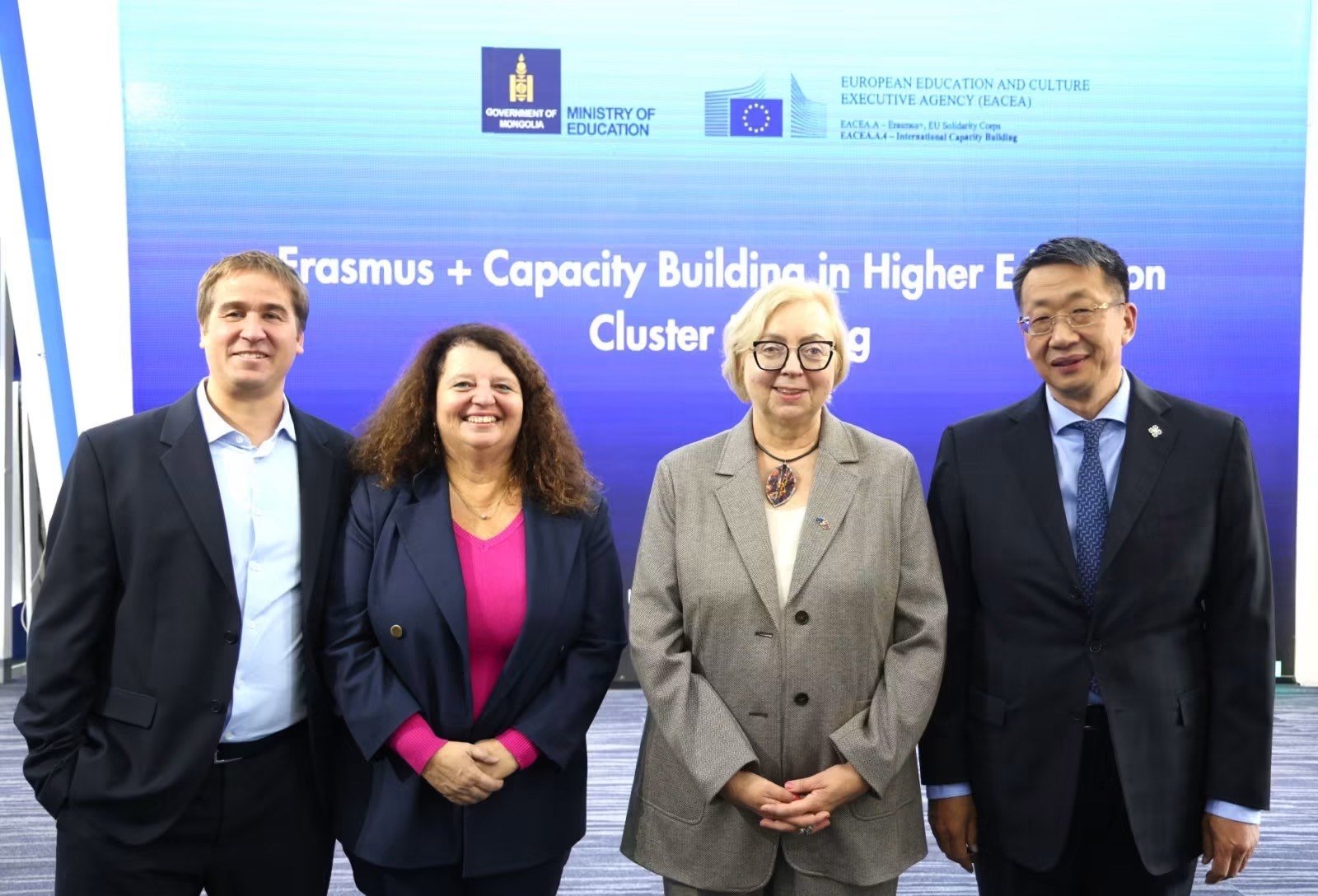
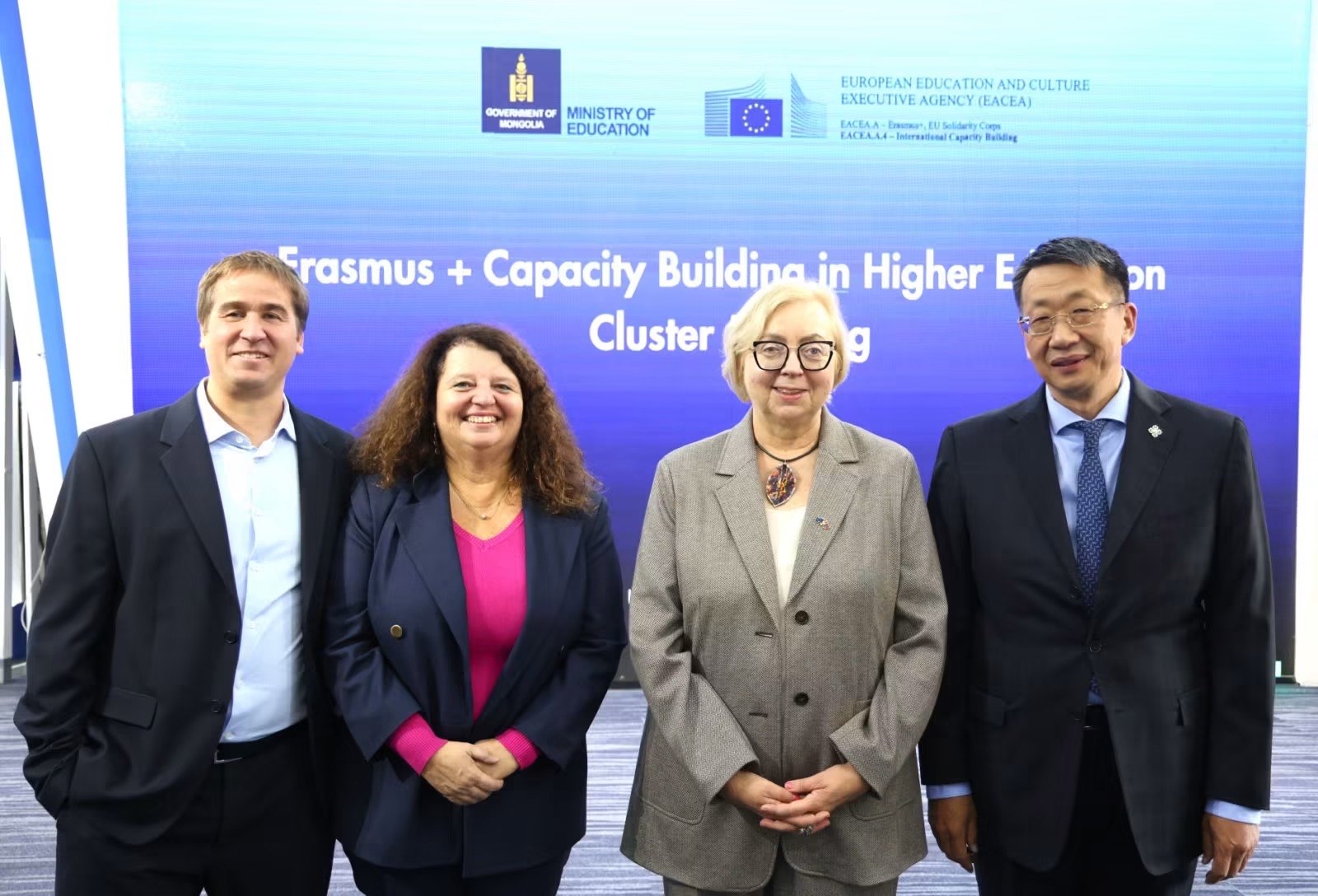
A cluster meeting of projects under the European Union’s Erasmus+ Capacity Building in Higher Education (CBHE) programme was held at the Ministry of Education of Mongolia. The meeting provided a platform to discuss project outcomes, implementation experiences and challenges, and to exchange views on opportunities to strengthen cooperation and coordination among universities and projects in Mongolia.
The meeting was attended by H.E. Ina Marčiulionytė, Ambassador of the European Union to Mongolia and Head of the EU Delegation to Mongolia; representatives of the European Education and Culture Executive Agency (EACEA); university rectors; deans of constituent schools; and project teams.
Minister of Education L. Enkh-Amgalan opened the meeting, highlighting the contribution of the Erasmus+ programme to expanding international academic and educational cooperation, supporting university reforms, and improving the quality of higher education. The Minister also underscored the importance of the EU-supported projects in advancing Mongolia’s higher education policy priorities. These include improving the quality, effectiveness, accessibility and competitiveness of higher education; developing human resources equipped with the knowledge, skills and attitudes required by the labour market and the country’s development priorities; strengthening the links between research, innovation and industry; transitioning towards a higher education system driven by data, digital technologies and artificial intelligence; and enhancing international competitiveness.
Under the 2021–2027 programming period, Mongolian universities are participating in 11 Capacity Building in Higher Education projects, with a total of 46 institutional participations. Two of these projects are led and implemented by Mongolian institutions. In addition, 128 participations by universities have been recorded under the programme, 30 students have received Erasmus Mundus master’s scholarships, and more than 450 academic exchanges have taken place between Mongolian and European universities.
During the meeting, participants received presentations on the management of higher education capacity-building projects, the role of the Erasmus+ National Contact Point, and projects targeting Mongolia. Discussions also focused on implementation challenges and the conditions necessary for effective project delivery. Project teams from COMP-LAW, 3L4MOHS, MONT-AE and NUTRIHubs4NCDs shared their experiences and lessons learned.
Projects focusing on the green transition, including SA2CC, RETEACH, DOMANI and GREENFUTURE, were also presented, alongside digital transformation initiatives such as DIGITAL MOVE, MONEUL and GreenTech Horizons. Participants discussed opportunities to strengthen synergies between these projects and other regional initiatives, with a view to enhancing cooperation and maximizing the impact of Erasmus+ support on Mongolia’s higher education sector.